Keep your glucose curve from quietly stealing your energy.
Metabolic health sits at the intersection of what we eat, when we eat, how we move, and how well we recover. For many people, the first sign of trouble is not dramatic disease — it is a slow drift toward insulin resistance, energy crashes, hunger swings, poor sleep, and a rising A1C.
This is why metabolic health deserves its own pillar. Food choice matters. Exercise matters. But the confluence of those two — especially meal timing, meal order, post-meal movement, and body composition — often determines whether your blood sugar stays stable or keeps pushing you toward prediabetes.
Glucose awareness
Better sleep
Less insulin resistance
The basics
Your A1C is one of the simplest and most useful blood tests in preventive medicine. It does not capture every spike, but it does show where your blood sugar has been living on average over the last few months. That makes it a practical scoreboard for your daily habits.
When glucose control worsens, people often feel it before they diagnose it: more cravings, post-meal sleepiness, mid-morning crashes, stubborn weight, reduced workout capacity, and rising fasting glucose. Over time, those patterns can be a sign that insulin is having to work harder to do the same job.
- Simple carbs alone can create a rapid spike and a rapid drop.
- Simple carbs with fat may keep glucose elevated for longer because the meal is both energy dense and slower to clear.
- Food timing matters. Late meals can distort overnight glucose and make recovery less efficient.
- Protein helps. It improves satiety, supports muscle maintenance, and muscle tissue generally improves insulin sensitivity.
- Food order matters. Starting with vegetables, protein, or fiber can flatten the curve.
The Glucose Goddess Method
Jessie Inchauspé’s The Glucose Goddess Method and her official website package blood sugar management into a simple, behavior-first system. It is approachable because it does not require calorie counting or extreme restriction.
Reduce the glucose hit
Favor meals that do not rely on naked refined carbohydrates. Build around fiber, protein, and whole foods.
Use food order strategically
Vegetables first, then protein and fats, then starches or sweets. This is the hack many people can implement tonight.
Move after meals
Even a short walk can help muscles soak up glucose and shrink the post-meal excursion.
Make it sustainable
The objective is not fear of food. The objective is repeatable habits that flatten the curve and reduce cravings.
What late eating looked like on Lingo + Garmin
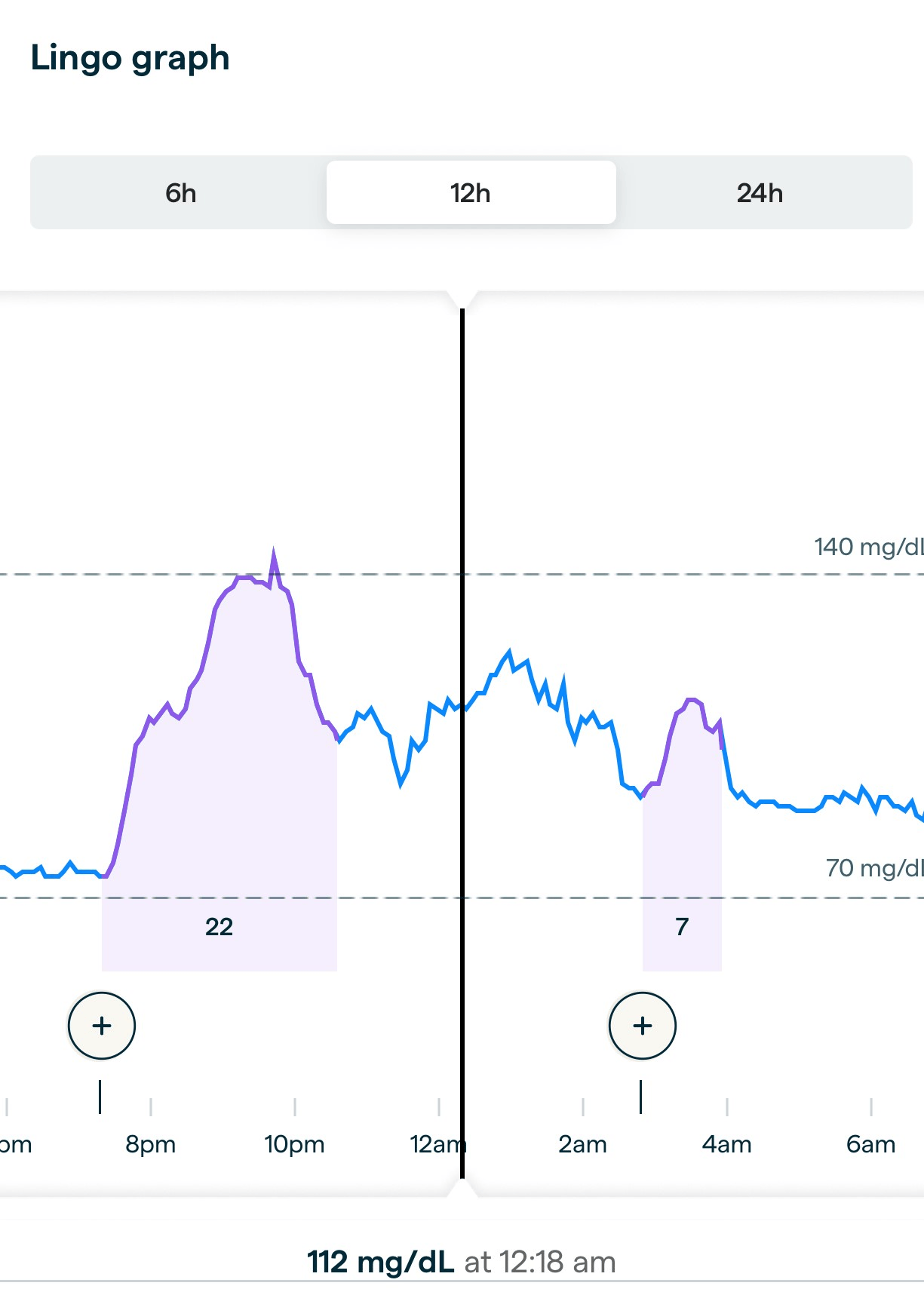
I started wearing an Abbott Lingo and noticed a pattern that surprised me by how obvious it became once I could see it. If I eat a heavy meal within roughly 3–4 hours of sleep, my heart rate tends to stay elevated while I am trying to digest it. That appears to make both sleep and metabolic recovery worse.
One example: an Italian Trio dinner — fettuccini alfredo, lasagna, and chicken parmesan — followed by an ice cream drumstick. Dinner ended around 8 p.m. I passed out on the couch by 9 p.m., later moved upstairs, and my glucose did not really settle until around 2 a.m. Even when it drifted back toward baseline, it rose again during the night.
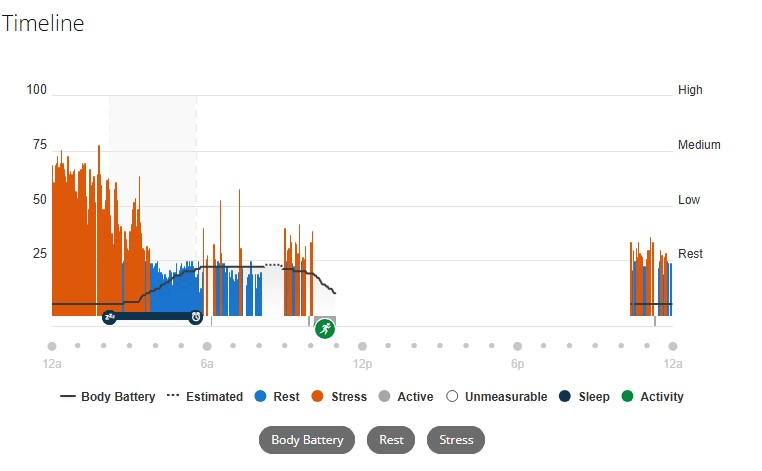
On the Garmin timeline, the same night shows up as elevated stress and much less restorative sleep than the clock alone would suggest. Even though I was in bed for a long stretch, the watch only credited me with about 3 hours and 18 minutes of real sleep.
What happened when dinner moved earlier
Now compare that to nights when I finished eating before 5 p.m. On Feb. 28 and March 1, I ate in the early evening instead of late. One of those days I also walked around Costco just after eating. That small bit of movement seemed to help digestion.
Even with a big bowl of ramen, the digestive stress was largely gone by around 8 p.m. Instead of carrying a heavy metabolic load into the night, my body had already done most of the work. The result was a dramatically better sleep signal and one of the strongest Body Battery rebounds I have seen in months.


Other levers worth testing
Vinegar before meals
Some studies suggest vinegar may reduce post-meal glucose, especially alongside higher-glycemic meals. It is easy to test, but it is still wise to watch your own response rather than assume the same effect for everyone.
Cinnamon
Cinnamon is popular, but the evidence is mixed. Some reviews report modest fasting glucose benefit, while NIH sources note that the research is not clear enough to treat it as a reliable therapy.
Berberine
Berberine has more promising glucose data than many supplements, but it can interact with medications and is not something to add casually without talking to a clinician.
The big question
Does avoiding simple carbs improve insulin resistance, or does avoiding them just make you more sensitive when you do eat them?
This is a useful question, and it deserves nuance. Reducing frequent refined-carb spikes can lower overall glucose load and often improves appetite control, energy stability, and A1C. But that does not mean the goal is to become fragile around every carbohydrate. The healthier goal is metabolic flexibility: being able to handle carbohydrates reasonably well because your baseline health is better.
In practice, the biggest wins usually come from improving the context around carbs rather than only arguing about carbs in isolation:
- Eat them later in the meal, not first.
- Pair them with protein, fiber, and activity.
- Avoid loading the heaviest carb meal right before sleep.
- Build and preserve muscle so your body has more room to store glucose well.
Videos to explore
Lingo first look
A practical walkthrough of Abbott’s Lingo biosensor and app, useful for visitors who want to understand what CGM-based habit feedback looks like in real life.
Eating before bed
This conversation highlights the common advice to stop eating a few hours before sleep and discusses why late meals can worsen overnight metabolic signals.
Meal timing and blood sugar
A useful discussion on circadian timing and why the same meal can land differently depending on when you eat it.
Insulin resistance basics
This is a good starting point for the question of whether the problem is “carbs” alone or the underlying state of insulin sensitivity.