Metabolic Health
Much of metabolic health is connected to food intake and exercise, but the
interaction of these two factors determines our insulin resistance and blood
sugar control. Because of this, metabolic health deserves its own pillar.
The Basics: A1C
Your A1C represents your average blood sugar over the last three months.
An A1C of 5.7% or higher is considered pre‑diabetes and
6.5% or higher is considered diabetes.
The encouraging part is that this number can often be reduced with better food
choices, exercise, and meal timing. This is one of the clearest examples of
food as medicine.
Simple carbohydrates eaten by themselves tend to spike blood sugar quickly.
Simple carbohydrates combined with fat can keep blood sugar elevated for a long
time. Timing also matters. Eating pure simple carbs in the morning can leave
you hungry and crashing by mid‑morning.
The Glucose Goddess Method
Jessie Inchauspe outlines a practical approach in her book
The Glucose Goddess Method.
- Eat vegetables and fiber first
- Pair carbohydrates with protein or fat
- Move after eating
- Avoid large glucose spikes when possible
In our family we follow the rule “Veggies first.” which aligns perfectly
with this approach.
Protein also helps reduce hunger and sugar cravings and is essential for
building muscle, which improves insulin sensitivity.
Example: Late Dinner and Blood Sugar
I recently started wearing an Abbott Lingo glucose monitor. I noticed that if
I eat a heavy meal within 3–4 hours of sleep, my heart rate stays elevated
while my body digests the food. This reduces the effectiveness of both sleep
and digestion.
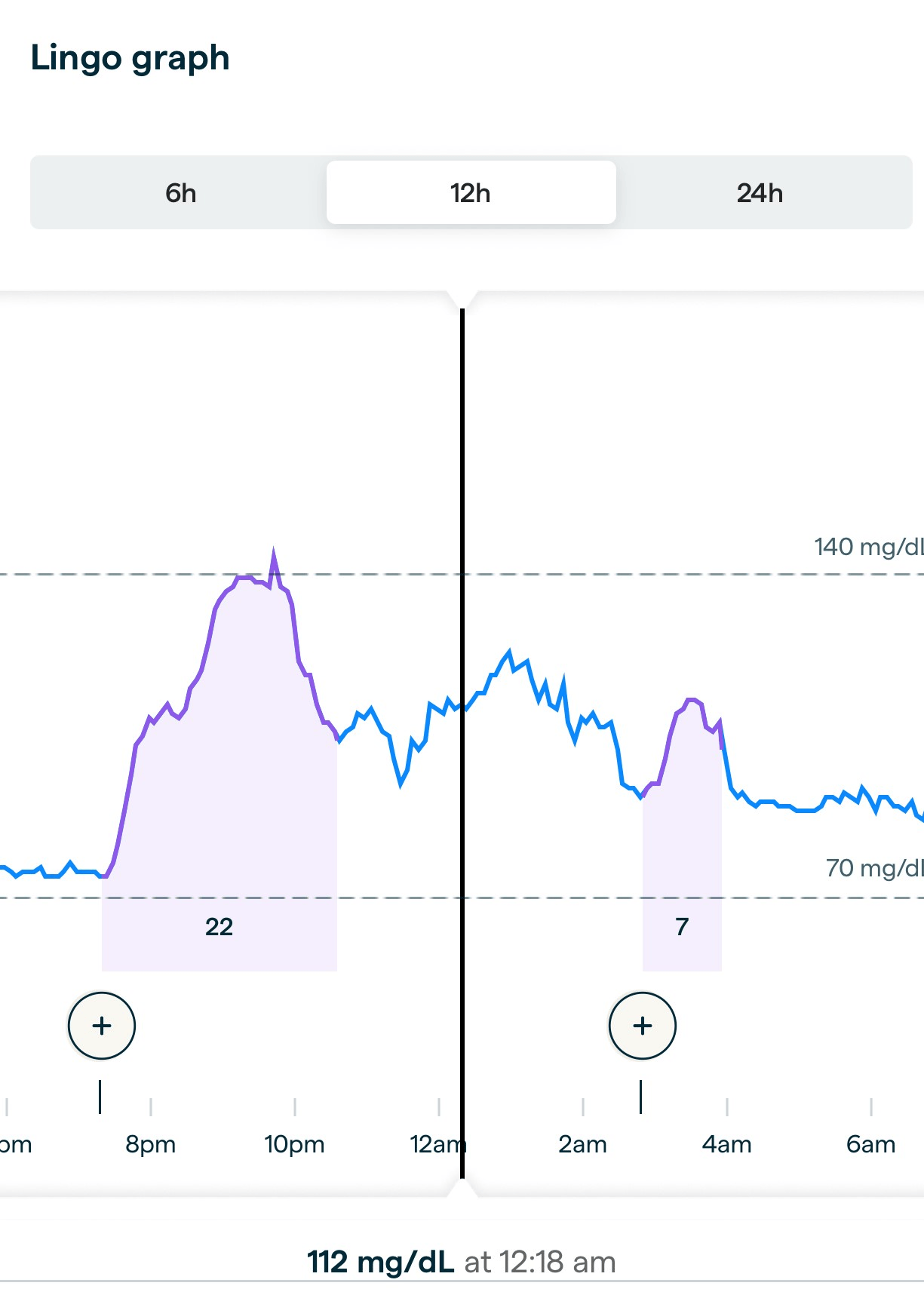
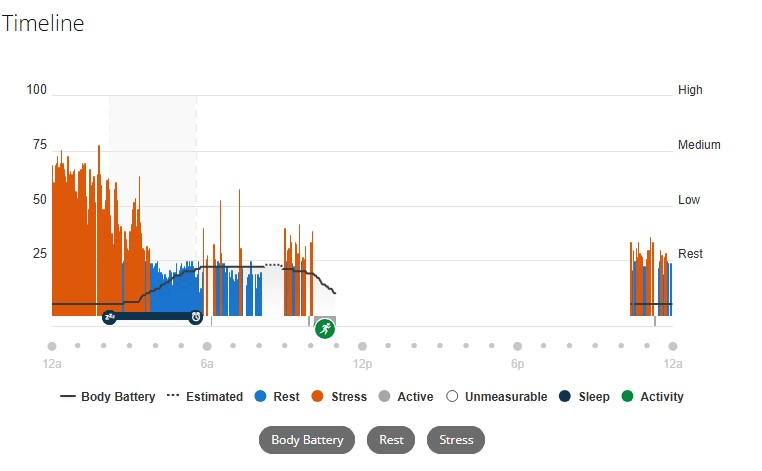
In this example I ate an Italian trio dinner — fettuccini alfredo, lasagna and
chicken parmesan — around 8 PM. I then came home, ate an ice cream drumstick,
and fell asleep around 9 PM.
My blood sugar finally dropped around 2 AM. During the night my glucose spiked
multiple times as digestion continued.
On the Garmin watch this shows up as elevated heart rate and “stress”.
Consequently the watch only gave me credit for about
3 hours and 18 minutes of sleep despite being in bed from 9 PM until 6 AM.
What Happens When I Eat Earlier?
Early dinner example
Recovery begins earlier when digestion stress is out of the way before bed.

Early dinner + movement
The combination of better timing and gentle activity produced one of the best
overnight rebounds I have seen in months.

In this case I ate earlier and walked around Costco after eating.
Even though I had a large bowl of ramen, digestion stress was gone by 8 PM
and I recorded one of the best overnight body battery rebounds I have seen in
six months.
Other Tools to Reduce Glucose Spikes
- Cinnamon before meals
- Berberine supplementation
- Vinegar before eating
- Walking after meals
which helps improve metabolic flexibility and insulin sensitivity.
An Interesting Question
One open question is whether avoiding simple carbohydrates entirely improves
insulin resistance, or whether it causes the body to become more sensitive
to them when they are reintroduced.
The likely answer is somewhere in the middle: minimizing spikes while still
maintaining metabolic flexibility.